
Fitness Tips
Your First Kickboxing Class in Santa Barbara: What to Expect
By Austin Curtis ·
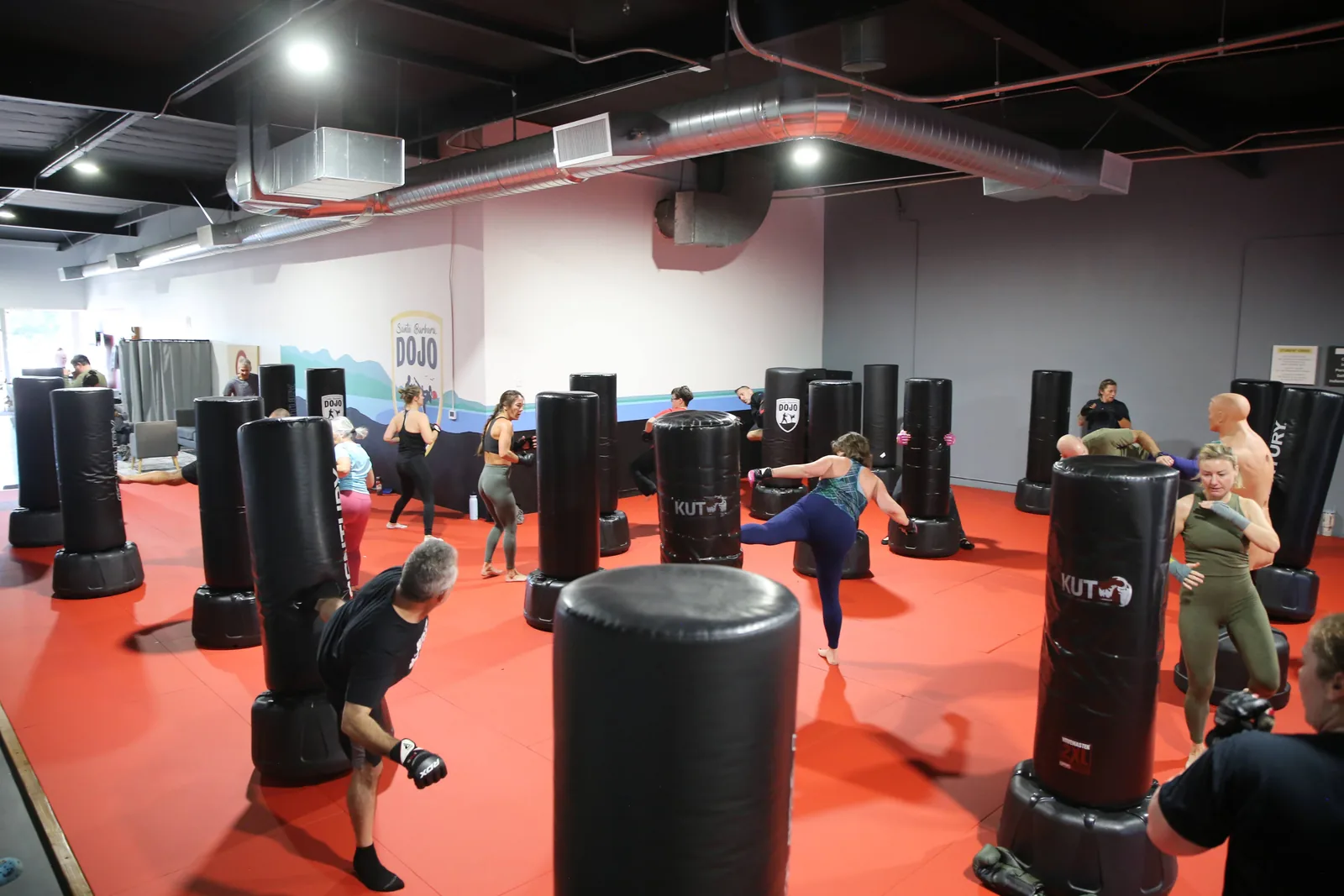
Walking into your first kickboxing class can feel intimidating. You might picture a boxing gym full of fighters, or a fast class where everyone already knows the moves. That isn't what our kickboxing classes are like. Here's what to expect, so you can walk in knowing what's ahead.
What KUT is, and how you start
KUT stands for Kickboxers Ultimate Training. It's our adult kickboxing fitness program at our Santa Barbara and Goleta dojos. It's a heavy-bag workout. You won't be sparring, there's no fight team, and it's a separate class from our kids and martial arts programs. You punch and kick a bag, and nobody punches or kicks you. It's built for real adults: parents, professionals and people coming back to exercise after time away. You don't need any boxing or martial arts experience.
Your first step is an orientation, a meeting with a coach before you join a class. Your coach will show you around the floor and ask what you want from training. Maybe you want to get stronger or have more energy, or maybe you just want somewhere to blow off steam after work. Whatever it is, tell us. It helps us coach you well.
Gloves are available at the dojo, so you don't need to buy gear for your first class. Wear comfortable workout clothes and bring water.
What happens in class
Every class follows a familiar shape: a warm-up to get your body moving and your heart rate up, kickboxing combinations on the heavy bag, and strength work to round things out. The coach calls out and demonstrates each combination, so you never have to invent your own workout.
You'll be on your own bag, working at your own pace in a room with everyone else. You set how hard you go. If you're new, or working around an injury, the coach will show you a lower-impact version of the same combination. If you've been training for a while, you can push the pace.
You won't be singled out as "the new person." The other adults are focused on their own bags, and every one of them had a first class once too.
How we coach
We keep instruction simple. When we teach a new combination, we name it, show it and give you a few short cues to focus on, such as "hands up, turn the hip, snap it back." We'd rather you get good at a few things than feel overwhelmed by many. As your coach walks the room, they'll help with those same cues and point out what you're doing well.
We also coach safety in a positive way. "Keep your hands up, they're your shield" helps you build good habits without making the bag feel like a threat.
You don't need to be coordinated on day one. Your first class is the awkward one, because every pattern is new. That's normal, and it passes quickly. After a few classes, the footwork starts to feel familiar and you can focus on power and pace instead of remembering what comes next. You also don't need to be in shape before you start. Kickboxing meets you where you are.
Why beginners stick with it
Kickboxing changes how a lot of beginners think about exercise. You aren't counting reps or wandering between machines. You're learning a skill, and the workout hides inside it. You move the whole time and leave with the feeling that you did something real. Hitting a bag is also a great way to let go of a stressful day.
The structure helps too. Because the coach plans the workout, all you have to do is show up. Steady beats intense: a few classes you can keep each week will take you further than an all-out burst you can't sustain. And because you're training with the same people each week, you start to feel like part of a community. People notice when you're missing, and they're glad when you're back.
If you keep training, you can log your workouts in our member app, including how often you come. That record is for you and your coach. It shows the weeks you showed up and isn't meant as a grade.
The weekly schedule stays consistent, so your next class will be in the same room, usually with the same coach. Pick the days that fit your week, put them on your calendar and come back. The second class is easier than the first, and that's where the habit starts to build.
Have questions or want to learn more? Contact us using the form below, and we'll be glad to help.
Step 1 of 2
Contact us for more information
Start with your name, phone, and email.