Martial Arts Philosophy
The ABCs of Self-Defense: Awareness, Boundaries, Confidence
By Austin Curtis ·
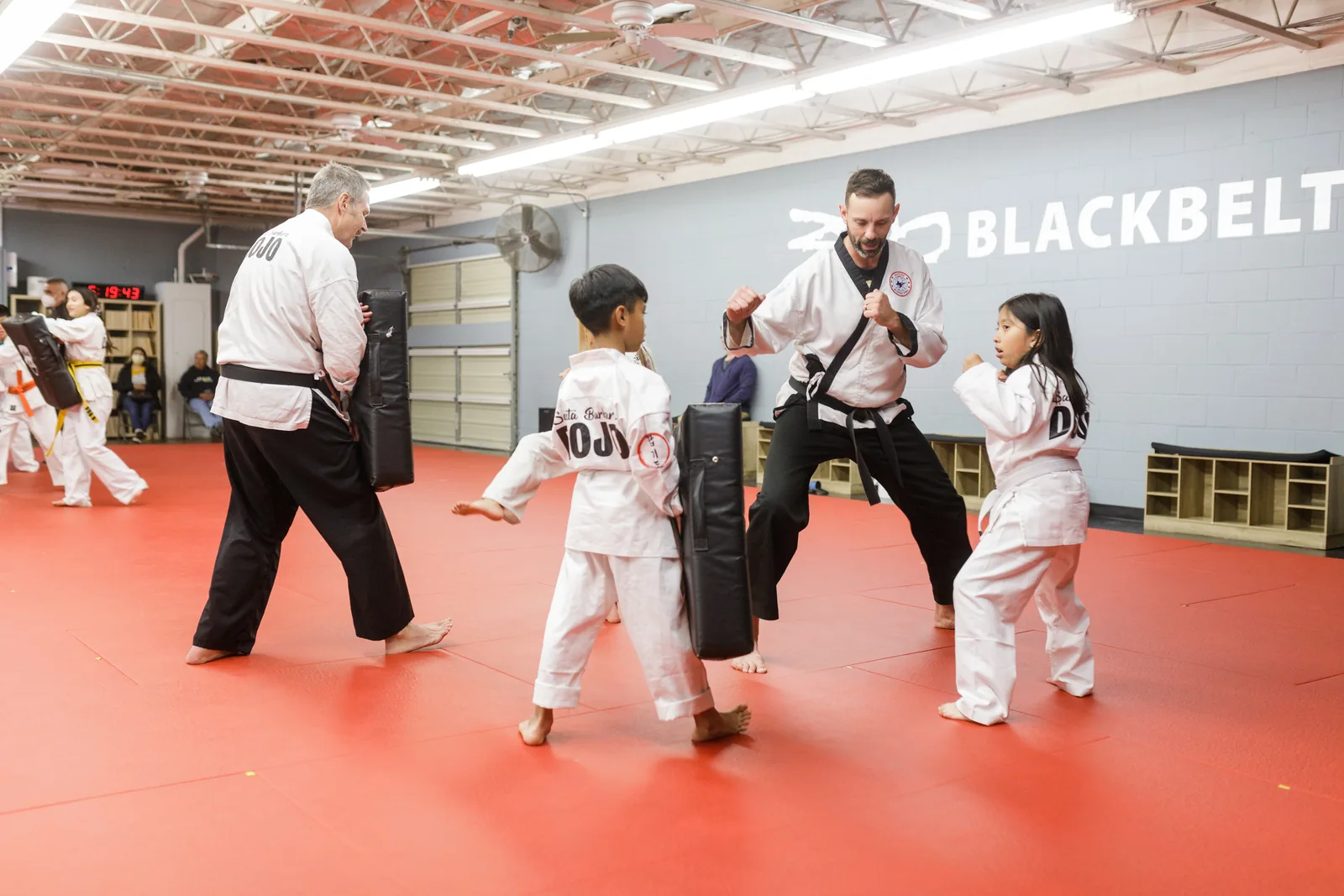
Self-defense is the "why" behind our training. Every block, kick and stance is there to keep you safe, and we want those skills to help long before anyone has to use a technique.
Think about swimming. If a child is afraid of the water, most parents still sign them up for lessons, because swimming is too important to skip. Even with lifeguards on duty, every parent wants their child to be able to swim on their own. Self-defense is the same kind of skill. Help may be minutes away, but situations unfold in seconds.
Most of self-defense happens before anything physical does. Long before a situation gets close, you can notice what is happening, say what you will and won't accept, and choose to leave. That is where our self-defense begins, with the ABCs.
A is Awareness and Avoid
Awareness is noticing the room you are in. Who is nearby. Where you can go. Whether something feels off. Avoid is what you do with that notice. You cross the street. You stay with people you trust. You leave while leaving is still easy. A student who spots trouble and steps away has already practiced real self-defense.
This is the part of self-defense that keeps you farthest from harm, and it's the part we want students using every day. It's also easy to practice as a family. When you walk into a restaurant, ask your child where the exits are. At the park, ask who they would go to if they needed help. Small games like these build the habit of noticing.
B is Boundaries
A boundary is a line you set, out loud and with your body. You can say stop. You can say no. You can ask someone to step back, and you can mean it. We practice that line in a calm voice, then we practice holding it. The people around you should not have to guess. You get to tell them. Setting a boundary is clear, and clear is safe.
A boundary only works if your voice can carry it. That's one reason our kids classes open with the Student Creed said out loud, and why students count out loud during warm-ups. When a child has practiced a strong voice in every class, a loud, clear "Stop!" isn't a new sound when they need it.
C is Confidence
Confidence, in our classes, is not a mood you hope shows up. It is your posture, the tone of your voice and your eye contact. You stand tall. You speak so you can be heard. You look at the person you are talking to. Those habits tell people that you are present and that you mean what you say. A steady tone and a tall posture can make a hard moment smaller.
Confidence also changes what happens before anything starts. A person who looks present and sure of themselves is a harder target, and a person who has practiced staying calm thinks more clearly when it counts. That's why we train posture, voice and eye contact as carefully as any technique. If a hard moment does come, it shows up where it matters: words first, space created and hands up to show you don't want to fight.
Techniques come after the ABCs
In our kids classes and in teen and adult Hapkido, the techniques come after the ABCs. We still train blocks, kicks and simple ways to get free, and we train them with care. Students learn to make a proper fist and to fall safely before anything else, and from the first lesson they hear that these moves are for self-defense only.
We also teach the difference between aiming to win and aiming to hurt. Winning through skill and control builds confidence and character. Hurting someone undermines both. Our focus is on not getting hit and never striking first. That's different from a sport-focused school, where training is built around taking a hit and hitting back. Both have value, but they are different experiences, and we've chosen the one that keeps people safe.
This isn't about raising fighters. It's about raising kids, and adults, who can handle themselves, stay calm under pressure and trust their own strength. The techniques rest on awareness, boundaries and confidence. If you can notice trouble, set a clear line and stand like you mean it, you are already defending yourself.
We hope you never need more than that. We want you to leave class knowing you could.
Have questions or want to learn more? Contact us using the form below, and we'll be glad to help.
Step 1 of 2
Contact us for more information
Start with your name, phone, and email.