
Parenting & Kids Development
How Martial Arts Builds Real Confidence in Kids
By Austin Curtis ·
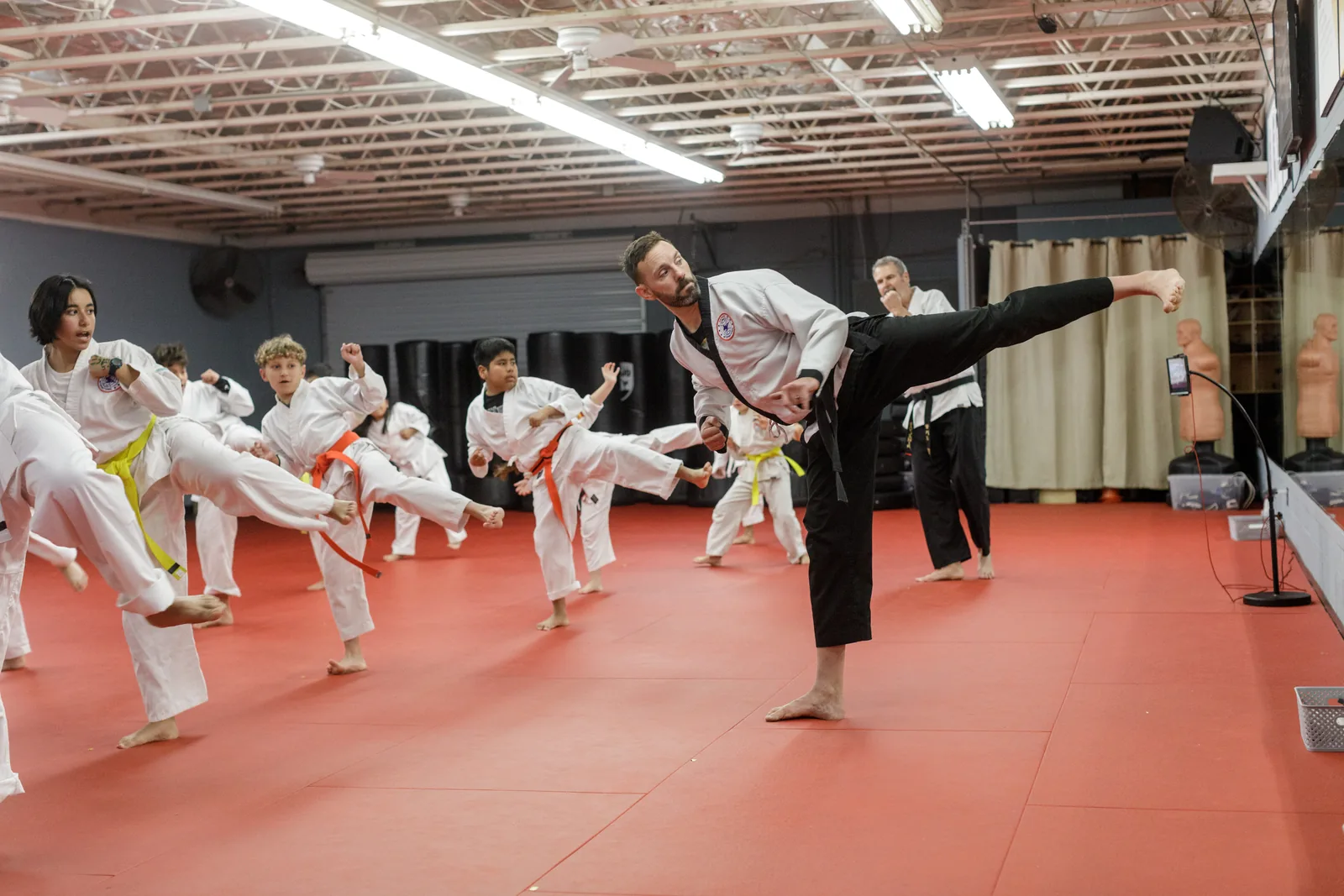
Every parent wants a confident child. Most of us try to build that confidence the way we were taught: we tell our kids they're great. We cheer and we praise. That matters. But after a lifetime of teaching martial arts, I've come to believe something that shapes how we run every class:
Confidence doesn't come from being told you're good. It comes from proving it to yourself. Praise fades quickly. Proof stays with you.
What we believe
You've been building your child's confidence since the day they were born. Every time you taught them to get dressed, catch a ball or ride a bike, what you were really teaching was belief in themselves. But confidence isn't always steady. A hard week at school or the habit of comparing themselves to others can knock it down. As a dad, I've seen it up close. One of my daughters once told me, with complete conviction, "I'm not confident." It's one of the most honest things a child can say.
Confidence is built through setbacks. If a child never struggles, they never get to overcome anything, and they have nothing to build confidence on. When a kick won't land or a child falls down in front of the class, that isn't failure. Failure only happens when you quit. The goal isn't to make kids feel good all the time. It's to help them see themselves as capable, even when things are hard. So we don't take difficulty out of class. We make the dojo a place where kids feel safe enough to meet it and keep going.
How we do it
We start one-on-one. Every new student begins with a private introductory lesson, so by the time they step into the group, they already know they can do it.
We make it safe to struggle. Kids need to know that a mistake won't be laughed at or held against them. We learn to fall before we try anything that might put us on the mat. As I tell students, "The mat doesn't bite. I've checked."
We praise the direction, not just the result. "Nice try" doesn't teach anything. Instead we say, "Yes! You're improving every time. Now turn your upper body a little more." I'm pointing them toward their own progress so they learn to see it themselves.
We let them work it out, and we give feelings room. Kids who solve a problem themselves own that success. When a child gets overwhelmed, a quick water break for everyone gives them a chance to breathe, and then we get back to work. A child who learns they can keep going while frustrated has learned something powerful.
Confidence also needs humility. The shy child may raise a hand to demonstrate a move and, before long, lead the warm-up. The overconfident child meets a technique they can't master right away. Both are met with patience, and both grow.
Practicing confidence out loud
Every class in our kids classes opens with our Student Creed: "I am a Martial Artist. I am building a strong body, a disciplined mind, and a resilient spirit." If it comes out as a mumble, we say it again. Students count out loud during warm-ups and introduce themselves to partners with a handshake and eye contact. Before receiving a new rank, they stand in front of the class and announce themselves. For some kids it's easy. For others it's the bravest thing they'll do all week.
I'll never forget one quiet young boy at his belt promotion. When his turn came, he stood up, took a deep breath and clearly announced his name and his technique. In the back of the room, his mother started to cry. After class she told me those were the first words she had ever heard her son speak. He had been non-verbal, and he spoke for the first time right there on the mat. I still tear up thinking about it.
What you can do at home
- Be specific. Instead of "Good job," try "You kept your hands up the whole time."
- Let them struggle a little before you help. Ask, "How might you fix that?"
- Celebrate effort and character as much as belts, like helping a younger student or sticking with something hard.
- Leave the coaching to class. From the bench, your best job is to be their biggest fan. If you'd like to do more, step onto the mat with them in a family class.
Real confidence is quiet. It doesn't need anyone's approval because it's built on evidence. A child who has proven to themselves, again and again, that they can struggle and keep going takes that into the classroom, the playground and every new challenge.
Have questions or want to learn more? Contact us using the form below, and we'll be glad to help.
Step 1 of 2
Contact us for more information
Start with your name, phone, and email.